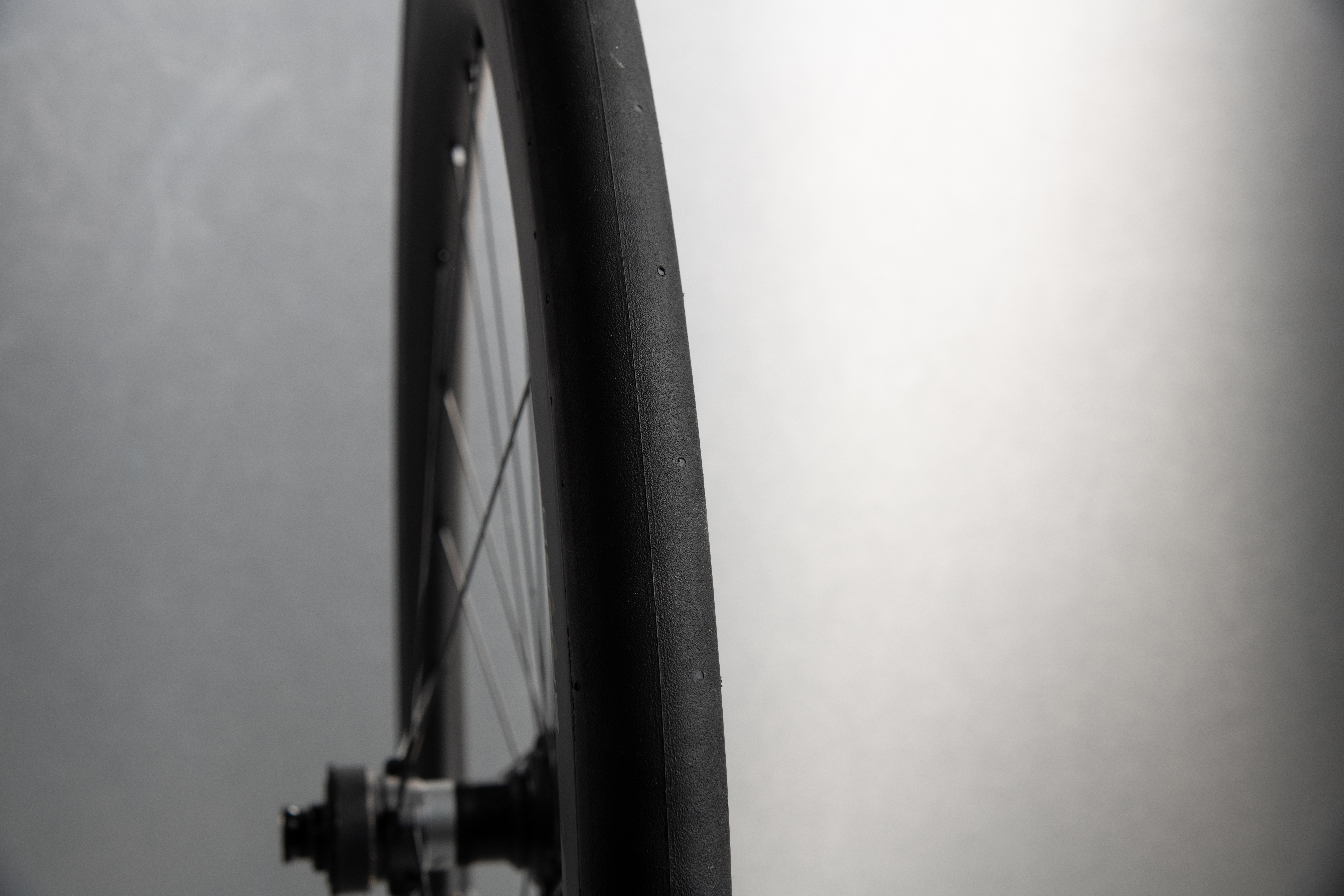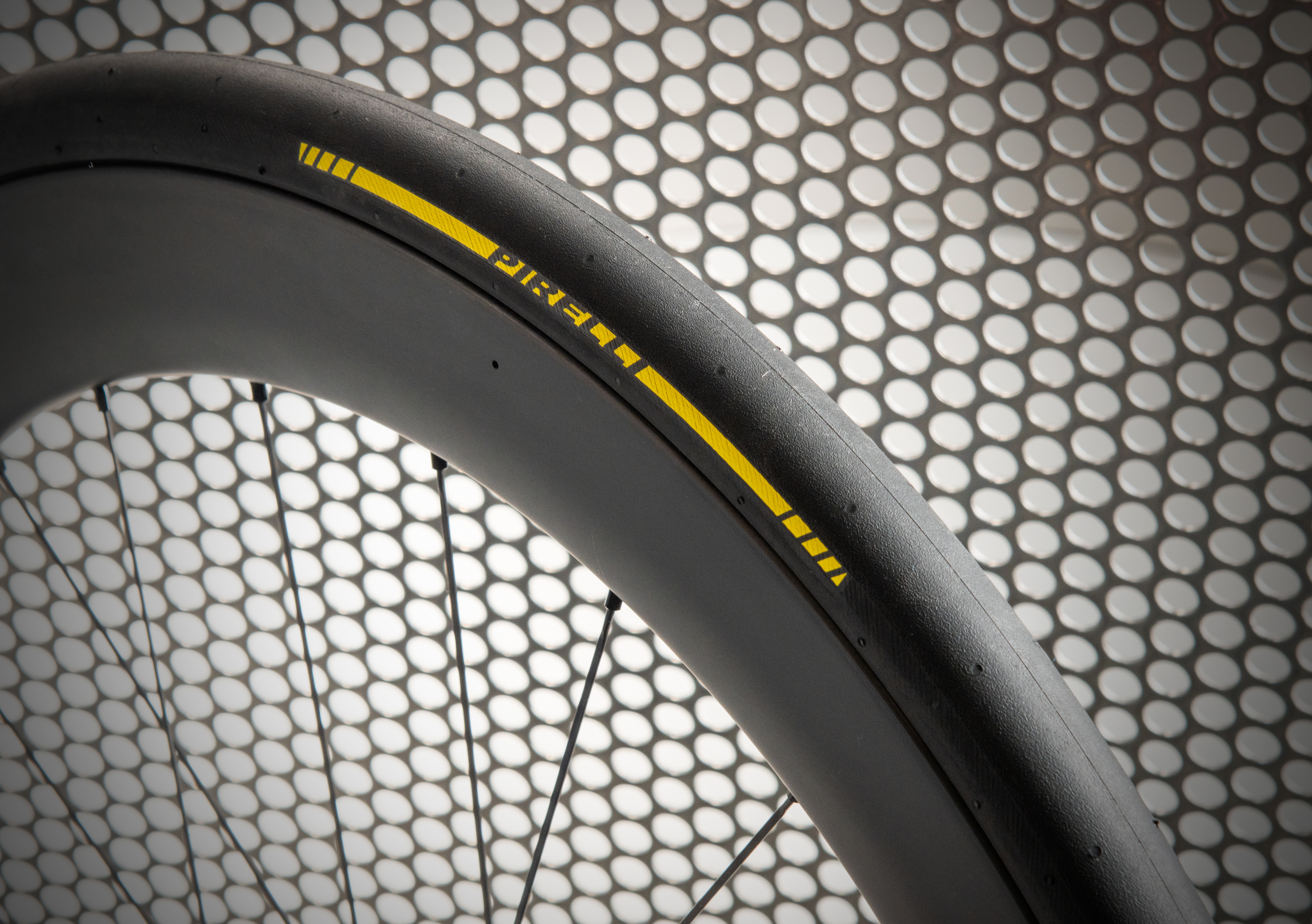
MAXIMUM TYRE AERO EFFICIENCY WITHOUT COMPROMISING OTHER PERFORMANCE FACTORS
PAAS (Pirelli Advanced Aerodynamic System) is born – a patented innovation (**) that will be introduced in the next generation of Pirelli tyres for road cycling, designed to deliver significant improvements (*) in terms of energy efficiency and speed.
Maximum tyre aero efficiency (*) without requiring compromises in other performance areas. This is what a new technology developed and patented (**) by Pirelli offers, designed for both amateur and competitive road cyclists, and which will serve as the new foundation for the development of future high-performance road bike tyres.
It is called PAAS, an acronym for Pirelli Advanced Aerodynamic System, and it stems from extensive research into the relationship between tyre shape, aerodynamic drag and the overall efficiency of the wheel–tyre system. This innovation draws on Pirelli’s advanced know-how in automotive tyre aerodynamics.
TYRE WIDTH, PROFILE AND AERODYNAMICS
At the medium and high speeds typical of modern cycling, from road races to time trials, the aerodynamic drag generated by the tyre has a decisive impact on overall performance. This aspect has become even more central with the established trend towards increasingly wider tyres and rims, which has significantly increased the frontal surface area of the wheel exposed to airflow. Consequently, improving tyre aerodynamics means increasing the aerodynamic efficiency of the entire wheel–tyre system, with a direct and tangible impact on cyclist performance. The wheel functions as an integrated system: if the airflow is disturbed by the tyre, the rim’s potential cannot be fully realised.
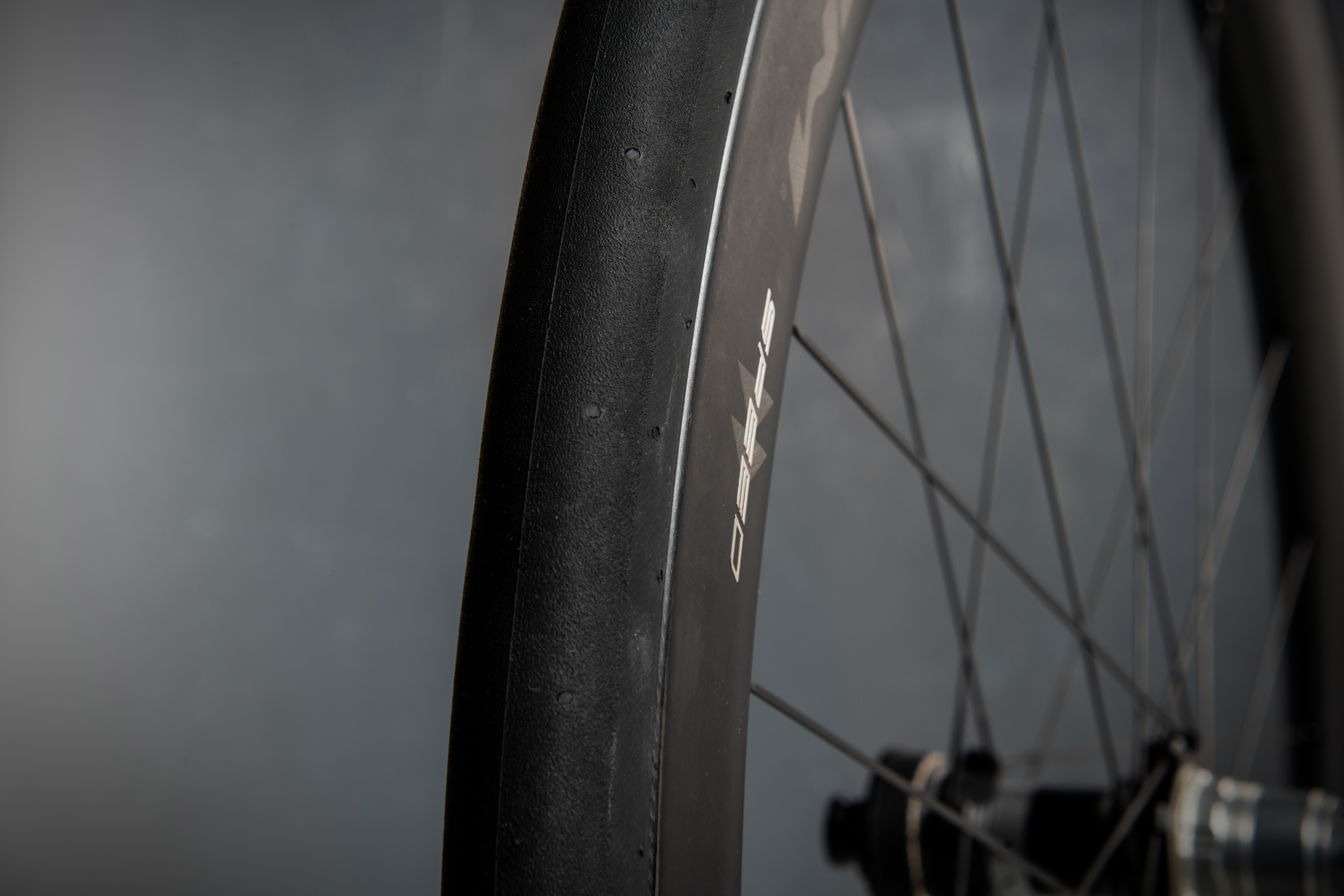
The technology developed and patented by Pirelli (**) introduces a tyre geometry specifically designed to interact efficiently with airflow. The key variable is the position of the tyre’s widest point in relation to its overall height once mounted and inflated on the wheel.
This position results from precise mathematical and geometrical ratios, studied using CFD (Computational Fluid Dynamics) software - the same tools used in the automotive industry to optimise aerodynamic shapes. Studies conducted by Pirelli have shown that there is a precise and unique zone in which to position the tyre’s widest point: in that position, the airflow remains attached to the tyre sidewall without separating, reducing vortex formation and lowering aerodynamic drag. The advantage is measurable across a wide range of yaw angles and at medium-to-high speeds, across a broad range of rim profiles (*), with a particularly evident benefit in the presence of crosswinds or high yaw angles.
Outro elemento distintivo da inovação da Pirelli é a sua estabilidade ao longo do tempo: ao posicionar o ponto mais largo do pneu nessa localização específica, a eficiência aerodinâmica mantém‑se elevada mesmo com o desgaste do pneu.
TESTES AVANÇADOS E VALIDAÇÃO EM TÚNEL DE VENTO
O PAAS é o resultado de um extenso programa de testes objetivos que aproveitou diretamente o software e o know‑how automóvel da Pirelli.
As avaliações foram realizadas através de simulações CFD de alta precisão, utilizando modelos não estacionários capazes de reproduzir fielmente a interação entre o fluxo de ar e o pneu em condições reais de utilização.
O processo de desenvolvimento incluiu 14 iterações de combinações dos parâmetros aerodinâmicos considerados, otimizando progressivamente as geometrias até definir os parâmetros finais subjacentes à patente.
Os resultados foram posteriormente verificados através de uma intensa campanha experimental em túneis de vento.
O programa de desenvolvimento incluiu 8 sessões dedicadas exclusivamente à Pirelli, realizadas em 4 túneis de vento diferentes, além de outras sessões conduzidas em conjunto com parceiros OE e equipas profissionais apoiadas pela Pirelli, com o objetivo de validar o desempenho aerodinâmico do sistema em diferentes configurações roda‑pneu e em condições reais de utilização.
As simulações analisaram o comportamento aerodinâmico do pneu para ângulos de guinada entre 0° e ± 20°, representando condições típicas de um ciclista a pedalar a velocidades superiores a 30 km/h.
Com a mesma largura nominal, largura máxima e altura total do pneu, as geometrias desenvolvidas com tecnologia PAAS — ou seja, as diferentes configurações de perfil para cada tamanho de pneu, com larguras entre 28 e 35 mm — apresentam reduções significativas na resistência aerodinâmica em comparação com pneus de perfil tradicional (*), com reduções médias superiores a 20% face à configuração Wheel + P ZERO Race TLR RS.
SEM COMPROMISSOS NOUTROS FATORES DE DESEMPENHO
O desafio técnico da Pirelli não foi apenas tornar o pneu mais eficiente do ponto de vista aerodinâmico, mas fazê‑lo sem penalizar outros aspetos.
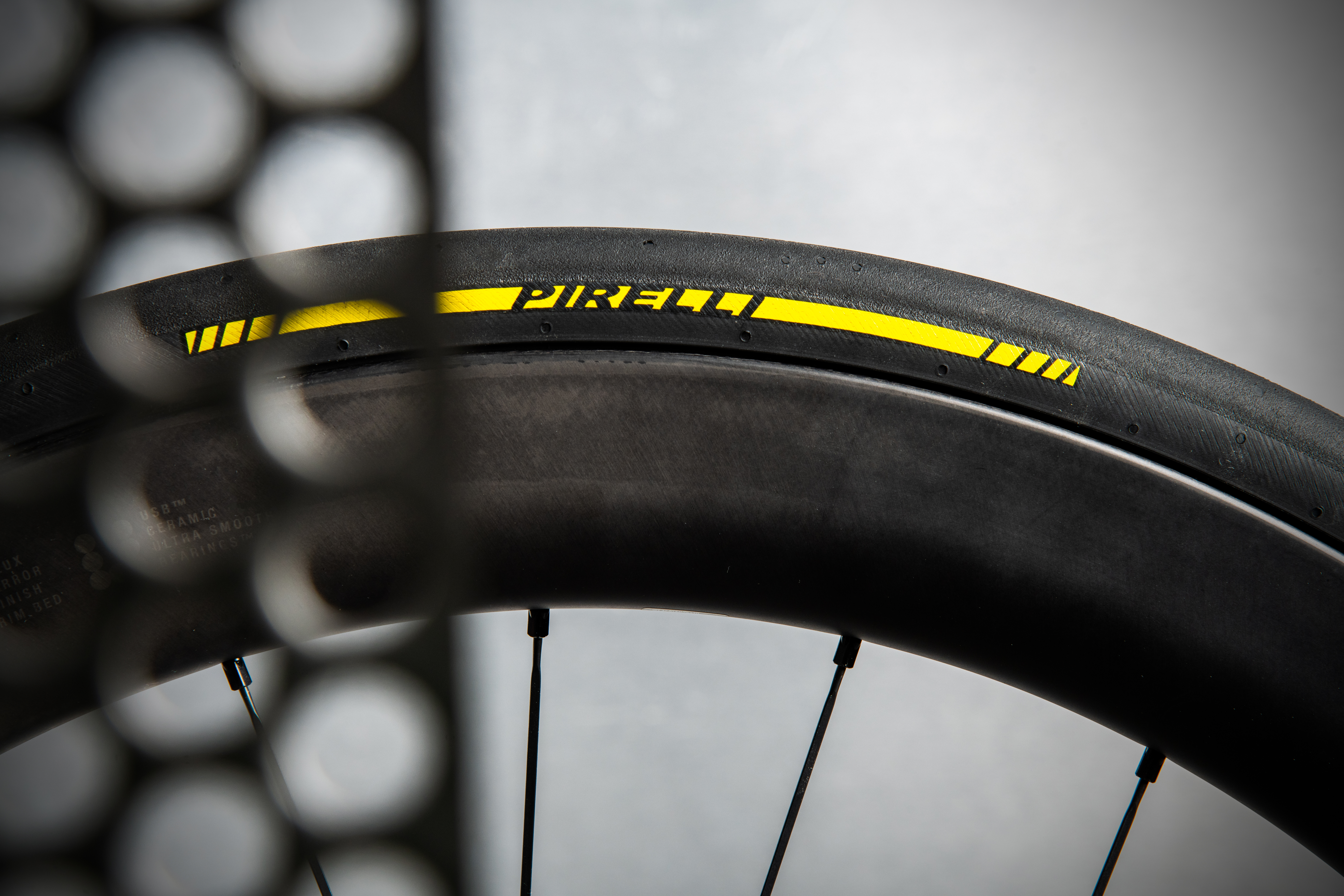
O PAAS é uma solução aerodinâmica que não elimina o espaço entre a parede lateral do pneu e a borda da jante, conseguindo ainda assim uma transição suave que o ar pode seguir sem turbulência.
Preservar esse espaço mantém também a facilidade de montagem e desmontagem do pneu.
O mesmo se aplica a outros aspetos funcionais e dinâmicos do pneu, como o peso ou a resistência ao rolamento, que não são afetados pela tecnologia PAAS.
(*) Testes internos realizados comparando um novo pneu Pirelli com PAAS com o P ZERO Race TLR RS.
(**) Patente pendente